5 Secrets to Building a Successful Massage Therapy Business

5 Secrets to Building a Successful Massage Therapy Business

5 Secrets to Building a Successful Massage Therapy Business Thumbnail

As a massage therapist, you are passionate about helping people by providing hands-on caregiving massage therapy that offers a balance between empathy, compassion, and professionalism.

BUT, if you want to have a successful massage therapy business you have to treat it as a business.

Here are 5 strategies that will help you achieve the successful massage therapy business you desire.

1. Establish Your Goals. Set some goals for your massage therapy business. This also includes writing down your income goals for the next 6-12 months, and the actions you need to take to get there.

2. Know the target audience you want to help. With thousands of massage therapists as competition, you must brainstorm what makes you different and unique. Defining your specialties will help you to better market to your ‘right fit’ massage therapy clients.

3. Market Your massage therapy business. Successful massage therapists are consistently marketing their business to the right people. Some marketing strategies include social media platforms, live workshops, creating short videos, starting a Youtube channel, and creating a Facebook group.

4. Be consistent and stay focused. Building a successful massage therapy business takes time, focus, and consistency. It will probably take at least a year to see growth in your business, so be patient!

5. Set a budget. It is inevitable that you will have to spend some money to build your massage therapy business. A great start is building a website and/or landing page to market yourself and your massage business.

Of course, having comprehensive liability insurance for massage therapy also guarantees a level of confidence and is a best business practice. The American Massage Council (AMC) offers the most affordable and reliable professional liability insurance for massage therapy coverage and more.

Professional liability insurance for massage therapy with American Massage Council offers peace of mind that you will be protected in your day-to-day massage practice so you can do what you love, helping others.

At the American Massage Council, we believe the more we help you, the more you will help others
Share:

More Posts

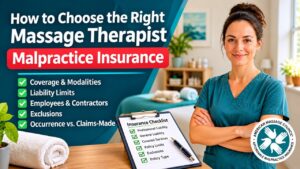
Massage therapist in teal scrubs beside a checklist of important malpractice insurance coverage considerations.

How to Choose the Right Massage Therapist Malpractice Insurance

Choosing massage therapist malpractice insurance involves more than comparing premiums. Learn how to evaluate professional and general liability coverage, policy limits, covered massage modalities, employee and contractor protection, exclusions, and occurrence versus claims-made policies. Use these practical questions to determine whether an insurance policy fits your massage practice.

Massage therapist and professional liability insurance protection for massage therapy practice

Does Every Massage Therapist Need Malpractice Insurance?

Massage therapists may need malpractice insurance to meet state licensing requirements, employer contracts, or professional obligations. Even when it is not legally required, individual coverage can help protect against covered liability claims. Learn how employment status, independent practice, and policy exclusions affect your insurance needs.

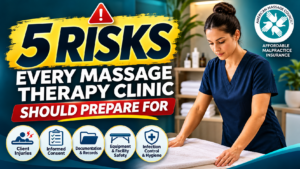
Massage therapist preparing a treatment room, illustrating five risks every massage therapy clinic should prepare for, including client injuries, informed consent, documentation, equipment safety, and infection control.

5 Risks Every Massage Therapy Clinic Should Prepare For

Massage therapy clinics face risks involving client injuries, inadequate documentation, informed consent, equipment failures, and infection control. Learn five practical ways to protect your clients, therapists, business operations, and professional reputation while understanding how appropriate massage therapist liability insurance fits into a comprehensive clinic risk-management strategy.

Massage therapist beside graphics representing negative online reviews and professional responses.

Responding to Negative Reviews the Right Way

Learn how massage therapists can respond to negative online reviews without escalating conflict or disclosing confidential client information. This practical guide includes a professional response template, advice on handling unfair or potentially fake reviews, steps for documenting complaints, and guidance on building a credible online reputation while protecting your practice.

Sign up for more exclusive news

American Massage Council

The application process is very important to AMC. In order to maintain the best rate possible we ask a few questions that help us to best determine the risk. These few questions can end up saving you money and time spent on an unfounded claim.

New Member Application

PDF New Member Application

Member Renewal Application

Other Applications

Latest Massage Information

Get notified of our latest posts